

Curry Powder
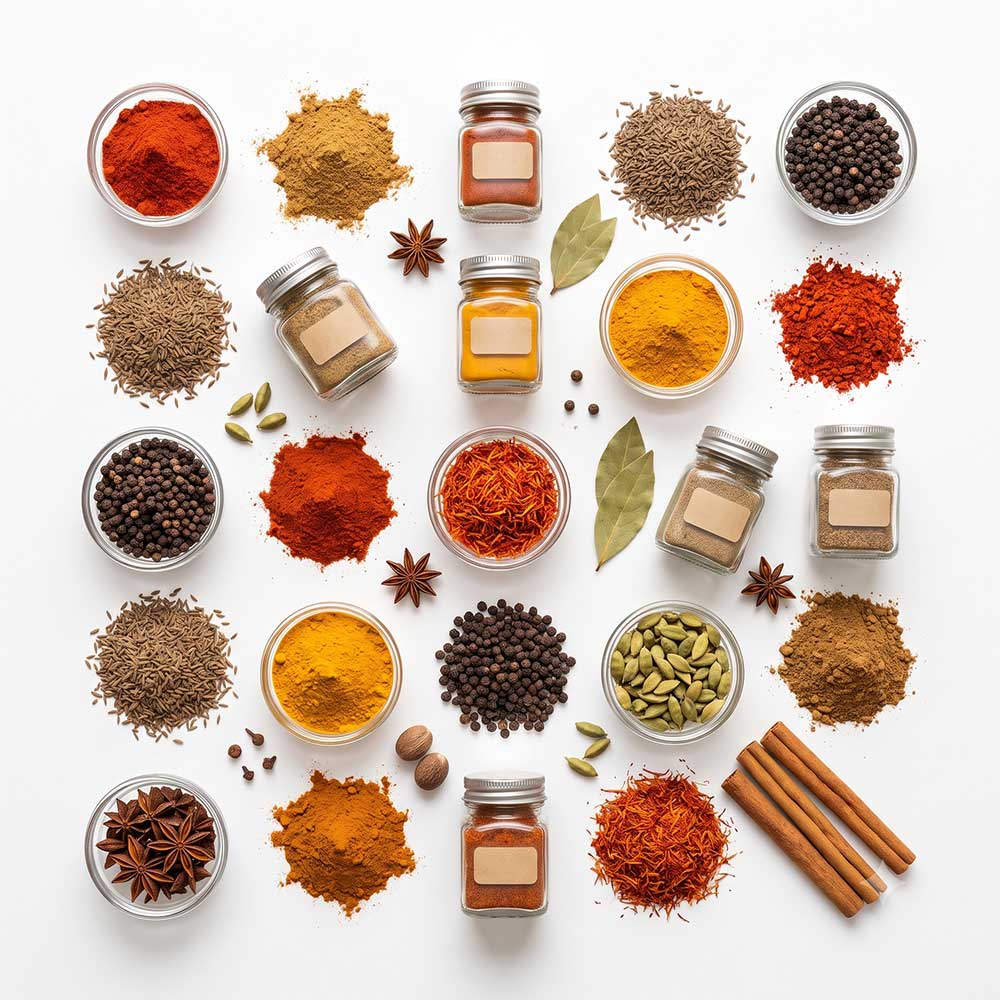
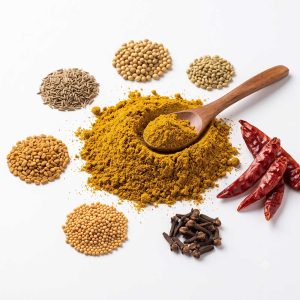
Widely used in Indian cooking, authentic Indian curry powder is freshly ground each day and can vary dramatically depending on the region and the cook. Curry powder is actually a pulverized blend of up to 20 spices, herbs and seeds. Among those most commonly used are cardamom, chiles, cinnamon, cloves coriander, cumin, fennel seed, fenugreek, mace, nutmeg, red and black pepper, poppy and sesame seeds, saffron, tamarind and turmeric (the latter is what gives curried dishes their characteristic yellow color). Commercial curry powder (which bears little resemblance to the freshly ground blends of southern India) comes in two basic styles — standard, and the hotter of the two, “Madras.” Since curry powder quickly loses its pungency, it should be stored, airtight, no longer than 2 months.
Dill
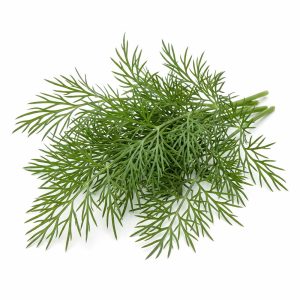
Dill is not only a pretty foliage plant; it’s fragrance is a “comfort smell” for many people. I barely touch it’s feathery leaves and the smell of homemade dill pickles, crisp and savory, rubs off on my hands. At the same time, dill is an herb that is often passed over as just a pickle spice and is not truly appreciated.
Growing Dill
Dill can easily be grown from seed in full sun, and can even tolerate a slightly sandy soil. However, when first planting you should keep the soil moist until established. Do not move your dill; instead plant where you will be growing it. Thin the seedlings to 10 inches apart; they will grow about 3 feet high. Use the seedlings that you pull up; they are tender and delicious! Be sure to let one of the plants remain with it’s seeds after the season is finished, so it will reseed itself. These plants will be much sturdier and hardier. Throughout the summer you can plant dill in 2 week intervals also, to maintain a supply of fresh leaves.
Using Dill
Dill leaf can be clipped and used in cottage cheese, potato salad, cream cheese, tomato soup and salads. You may also sprinkle chopped young dill on broiling lamb, pork chops or steak during the last five minutes of cooking. The seeds that form on dill can be sprinkled on small pieces of toast or crackers with salmon that has been mixed with mayonnaise. Both the seed and leaf can be used in fish sauces. The fresh leaves can be frozen in small resealable bags and used in dishes. When the leaves are dried, they are referred to as dill weed in recipes. The seeds can be kept in a closed container and used as needed.
Fennel
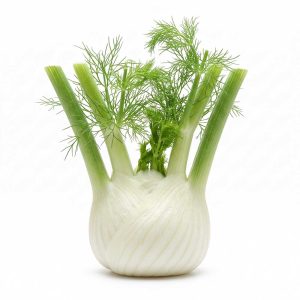
There are two main types of this aromatic plant, both with pale green, celery like stems and bright green, feathery foliage. Florence fennel, also called finocchio, is cultivated throughout the Mediterranean and in the United States. It has a broad, bulbous base that’s treated like a vegetable. Both the base and stems can be eaten raw in salads or cooked in a variety of methods such as braising, sautéing or in soups. The fragrant, graceful greenery can be used as a garnish or snipped like dill and used for a last-minute flavor enhancer. This type of fennel is often mislabeled “sweet anise,” causing those who don’t like the flavor of licorice to avoid it. The flavor of fennel, however, is sweeter and more delicate than anise and, when cooked, becomes even lighter and more elusive than in its raw state.
Common fennel is the variety from which the oval, greenish-brown fennel seeds come. The seeds are available whole and ground and are used in both sweet and savory foods, as well as to flavor many liqueurs. As with most seeds, they should be stored in a cool, dark place for no more than 6 months. Though common fennel is bulbless, its stems and greenery are used in the same ways as those of Florence fennel. Fennel is available from fall through spring. Choose clean, crisp bulbs with no sign of browning. Any attached greenery should be a fresh green color. Refrigerate, tightly wrapped in a plastic bag, up to 5 days. Fennel is rich in vitamin A and contains a fair amount of calcium, phosphorus and potassium.
Ginger
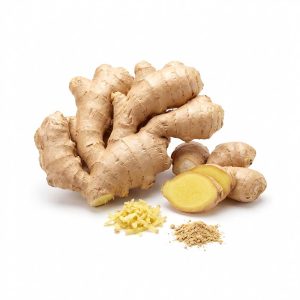
Ginger is one of those indispensable herbs that we often take for granted. I can remember having a jar of ground ginger in my cupboard for so long that it lost it’s flavor! That was before I realized how many things it could be used for.
In the 13th Century the English Royalty loved it so much it became worth it’s weight in gold. We are fortunate that we can buy ginger fresh or ground at our grocery stores without having to sell our earthly possessions.
You can grow fresh ginger by planting a ginger root in a 12 inch pot, just below the surface of the dirt. Place the pot in a warm sunny spot, making sure it has good drainage. Water sparingly until the small green shoots appear, and then water well. Ginger loves being misted and fertilized regularly. You will have to bring it inside during the winter, where it will become dormant and die down. After the plant is well established, in about a year, dig up the roots from the newer sprouts to use; these will be more flavorful.
Roots will keep in the refrigerator for up to three weeks, and you can freeze them if they are wrapped well in plastic.
You can use fresh ginger in recipes that call for dried, but use about half the amount called for.
You can peel ginger root and chop it into very thin pieces for adding to any stir fry recipe. Try adding thin slivers to your poached fruit recipes or compotes. Grate the ginger root and add to vegetable recipes as you boil or steam them. Of course, we all know that ground ginger is invaluable in holiday recipes!
Mace
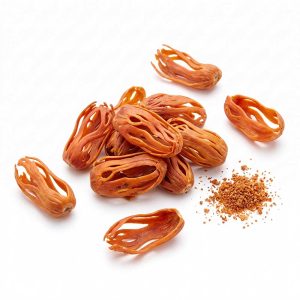
This spice tastes and smells like a pungent version of nutmeg, and for a very good reason . . . mace is the bright red membrane that covers the nutmeg seed. After the membrane is removed and dried it becomes a yellow-orange color. It’s sold ground and, less frequently, whole (in which case it’s called a “blade”). Mace is used to flavor all manner of foods, sweet to savory.
Marjoram
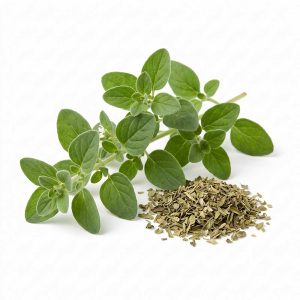
Early Greeks wove marjoram into funeral wreaths and planted it on graves to symbolize their loved ones’ happiness both in life and beyond. There are many species of this ancient herb, which is a member of the mint family. The most widely available is sweet marjoram, usually simply called “marjoram.” It has oval, inch-long, pale green leaves and a mild, sweet, oreganolike flavor. In fact, wild marjoram is another name for Oregano. Marjoram is available fresh in some produce markets and supermarkets with large fresh-herb sections. More often, it is found dried in small bottles or cans. There’s also a very hardy species called pot marjoram, which has a stronger, slightly bitter flavor. It’s found throughout Mediterranean countries but rarely seen in the United States. Marjoram can be used to flavor a variety of foods, particularly meats (especially lamb and veal) and vegetables. Because marjoram’s flavor is so delicate, it’s best added toward the end of the cooking time so its essence doesn’t completely dissipate.
Mustard
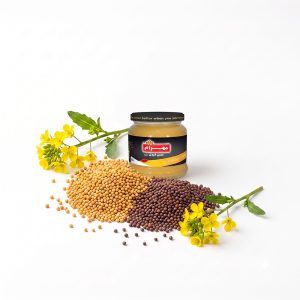
Any of several species of plant grown for its acrid seeds and leaves, which are called mustard greens. The mustard plant belongs to the same family as broccoli, Brussels sprouts, collards, kale and kohlrabi. Down through the centuries it has been used for culinary as well as medicinal purposes; the most notable example of the latter is mustard’s purported efficacy as a curative for the common cold. The name is said to come from a Roman mixture of crushed mustard seed and MUST (unfermented grape juice), which was called mustum ardens (“burning wine”). Likewise, the French word moutarde (“mustard”) comes from a contraction of their moust (“must”) and a form of ardent (“hot” or “fiery”).
There are two major types of mustard seed — white (or yellow ) and brown (or Asian ). A third species, the black mustard seed, has been replaced for most purposes by the brown species because the latter can be grown and harvested more economically. White mustard seeds are much larger than the brown variety but a lot less pungent. They’re the main ingredient in American-style mustards. White and brown seeds are blended to make English Mustard. Brown mustard seeds are used for pickling and as a seasoning, and are the main ingredient in European and Chinese mustards. Mustard seeds are sold whole, ground into powder or processed further into prepared mustard. Powdered mustard is simply finely ground mustard seed. Mustard seeds can be stored for up to a year in a dry, dark place and powdered mustard for about 6 months. Whole seeds are used for pickling, flavoring cooked meats and vegetables and as a source for freshly ground mustard. Powdered mustards and freshly ground seeds are used in sauces, as a seasoning in main dishes and as an ingredient in salad dressings
Nutmeg
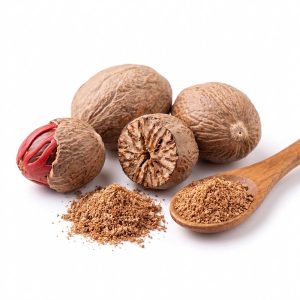
When Columbus sailed from Spain looking for the East Indies, nutmeg was one of the spices for which he was searching. Native to the Spice Islands, this seed from the nutmeg tree (a tropical evergreen) was extremely popular throughout much of the world from the 15th to the 19th century.When the fruit of the tree is picked, it is split to reveal the nutmeg seed surrounded by a lacy membrane that, when dried and ground, becomes the spice mace. The hard, egg-shaped nutmeg seed is grayish-brown and about 1 inch long. The flavor and aroma are delicately warm, spicy and sweet. Nutmeg is sold ground or whole. Whole nutmeg freshly ground with a nutmeg grater or grinder is superior to that which is commercially ground and packaged. Nutmeg is excellent when used in baked goods, milk- or cream-based preparations like custards, white sauces or eggnog and on fruits and vegetables — particularly potatoes, spinach and squash.