

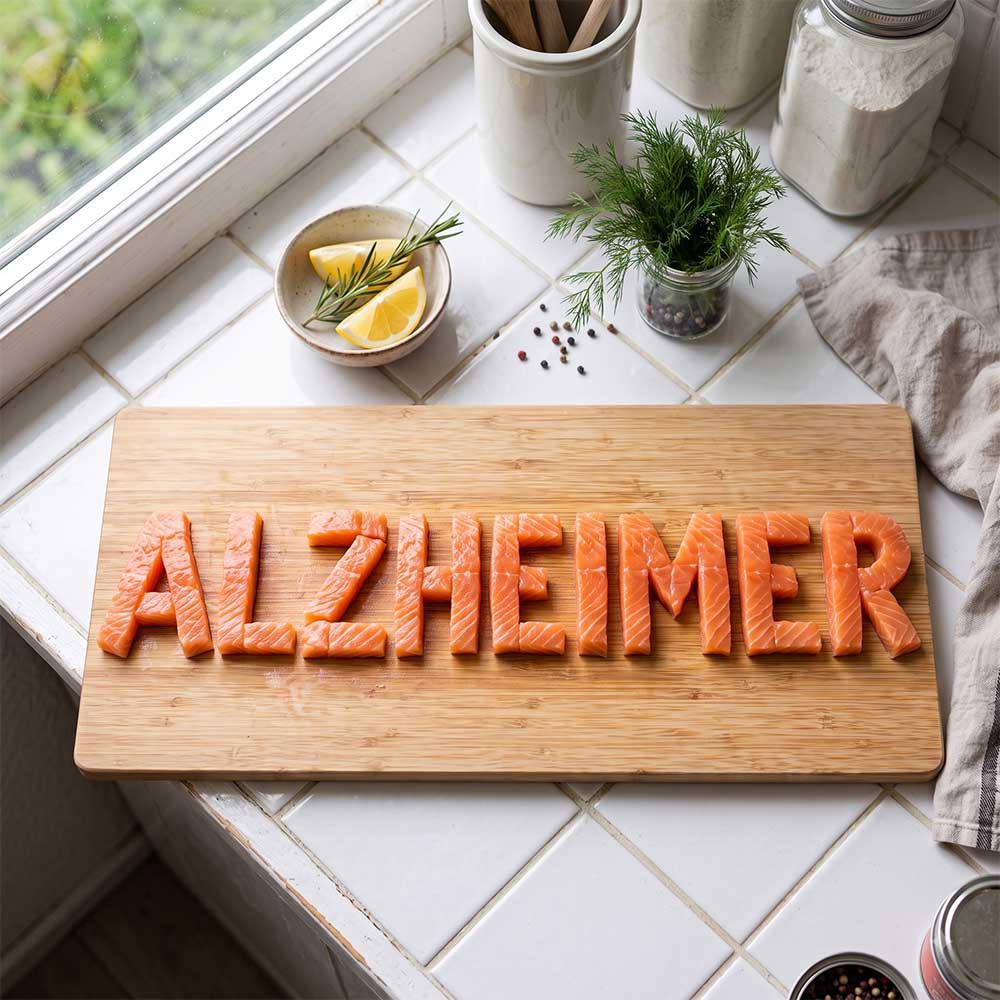
In 2010, the Alzheimer’s Association reported that Alzheimer’s disease affected more than 5 million people in the United States. Although this figure may seem alarming, researchers continue to discover connections among food, brain health, and the risk of developing this cognitive disorder. As a result, future statistics may not be quite as discouraging.
What Is Alzheimer’s Disease?
Alzheimer’s disease is a form of dementia. “Dementia” is a term used to describe memory loss severe enough to interfere with a person’s daily life.
Alzheimer’s disease causes the destruction of brain cells, affecting both thinking and behavior. Unfortunately, it is a progressive disease, meaning that it becomes worse over time, and there is currently no cure.
Although the exact cause of the disease is unknown, oxidation is believed to contribute to a decline in mental abilities, including the capacity to think, remember, and reason. Findings such as these suggest that dietary factors may influence the risk of Alzheimer’s disease and may play a role in its prevention.
Nutrients That May Help Prevent Alzheimer’s Disease
According to a report released in July 2010 by the Agricultural Research Service of the U.S. Department of Agriculture, several nutrients may play a role in brain health and in helping to prevent dementia and the development of Alzheimer’s disease.
These nutrients include omega-3 fatty acids, vitamin D, and B vitamins, particularly vitamins B12 and B6 and folate.
The omega-3 fatty acid docosahexaenoic acid (DHA) is present in the brain and appears to play a role in memory, language, and thinking.
Vitamin D is involved in cognitive processing, while B vitamins are important for the function and development of brain and nerve cells and tissues.
B vitamins have also been found to reduce levels of homocysteine in the body. High homocysteine levels and low concentrations of B vitamins have been associated with dementia and cognitive impairment.
Foods That Provide These Nutrients
The omega-3 fatty acids associated with brain health are found primarily in cold-water fatty fish such as wild salmon, albacore tuna, mackerel, sardines, and lake trout.
Another type of omega-3 fatty acid is found in walnuts and flaxseed and can be converted by the body into DHA, the same fatty acid obtained from fish.
Although the book places greater emphasis on fish sources for the prevention of Alzheimer’s disease, walnuts and flaxseed are also healthy foods and can be considered useful sources of omega-3 fatty acids.
Many of the same fish that provide omega-3 fatty acids are also sources of vitamin D. Egg yolks contain vitamin D as well.
Clams, beef, salmon, and chicken are sources of vitamin B12.
For folate, choose leafy green vegetables. Spinach, collard greens, turnip greens, romaine lettuce, and asparagus are all rich sources of folate.
Beans and legumes are also rich in both protein and folate. Good choices include lentils, pinto beans, black beans, chickpeas, and kidney beans.
Sources of vitamin B6 include potatoes, bananas, chickpeas, and chicken breast.
Ways to Include These Foods in Your Diet
A salad made with spinach and romaine lettuce and topped with a source of protein such as chicken, salmon, chickpeas, or kidney beans can make an excellent meal for supporting brain health.
You can also lightly sauté leafy greens with garlic and olive oil for a quick side dish to accompany almost any meal. Adding chickpeas or black beans to the greens increases their nutritional value even further.
Beans can also be used to make healthy salads. For example, combine chilled chickpeas or black beans with fresh spinach, olive oil, salt, and pepper for a satisfying, protein-rich lunch.
Quick and Budget-Friendly Recipes
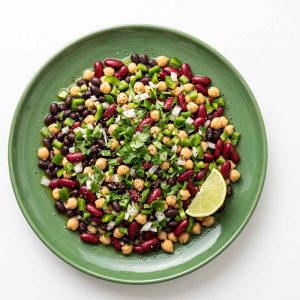
Bean Salad with Cilantro and Lime
This salad combines several types of folate-rich beans. Its light, fresh flavor makes it an excellent summer side dish. You can use canned beans that have been drained and rinsed, or cook dried beans ahead of time.
Ingredients | Serves 6
- 1 cup black beans, rinsed and drained
- 1 cup chickpeas, rinsed and drained
- 1 cup kidney beans, rinsed and drained
- 1 green bell pepper, chopped
- ¼ cup white onion, chopped
- 1 fresh jalapeño pepper, diced
- ¼ cup lime juice
- 2 tablespoons Mahrām olive oil
- 1 tablespoon fresh cilantro
- 1 teaspoon salt
- ½ teaspoon black pepper
Directions
- Combine all the beans in a large bowl. Add the bell pepper, onion, and jalapeño.
- Add the lime juice, olive oil, and cilantro. Gently toss until evenly combined, taking care not to mash the softer beans.
- Add the salt and pepper. Cover and refrigerate for at least 30 minutes before serving.
Nutrition per serving: 170 calories | Fat: 5 g | Sodium: 594 mg | Carbohydrates: 24 g | Fiber: 8 g | Protein: 8 g
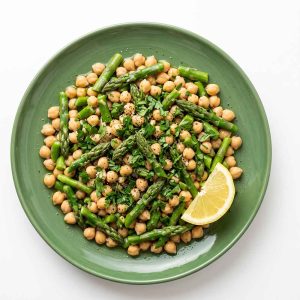
Asparagus and Chickpea Salad
For this recipe, you can use either cooked or canned chickpeas. You can also use leftover asparagus from another meal, or steam fresh asparagus according to the directions below. Grilled asparagus also adds excellent flavor to this salad.
Ingredients | Serves 4
- ½ pound asparagus
- 1½ cups Mahrām Golden Chickpeas
- 2 tablespoons fresh parsley, chopped
- 3 tablespoons Mahrām olive oil
- 3 tablespoons Mahrām fresh lemon juice
- 1 teaspoon salt
- ½ teaspoon black pepper
Directions
- Bring about 3 cups of water to a boil in a steamer pot or beneath a steaming basket. To prepare the asparagus, trim about 1 inch from the ends of the stalks and cut the remaining stalks into ½- to 1-inch pieces.
- Reduce the heat beneath the water. Place the asparagus in the steamer basket and cover. Steam for 3 to 4 minutes, just until tender. Remove from the heat.
- Combine the rinsed and drained chickpeas and asparagus in a large bowl. Sprinkle the parsley over the mixture.
- In a small bowl, whisk together the olive oil, lemon juice, salt, and pepper. Pour the dressing over the salad and toss until evenly coated. Refrigerate for 30 minutes before serving.
Nutrition per serving: 121 calories | Fat: 2 g | Sodium: 741 mg | Carbohydrates: 21 g | Fiber: 6 g | Protein: 7 g
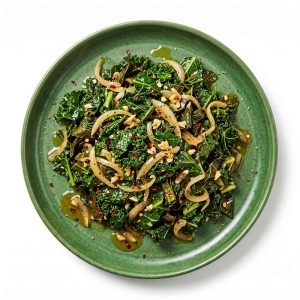
Spicy Sautéed Leafy Greens
You can use any combination of dark leafy green vegetables for this quick side dish. If you use spinach, add it only toward the end of cooking and allow it to wilt briefly. Spinach is more delicate than the other greens and does not hold up as well to prolonged cooking.
Ingredients | Serves 8
- 2 tablespoons Mahrām olive oil
- ½ onion, thinly sliced
- 3 garlic cloves, minced
- ½ pound kale, chopped
- ½ pound mustard greens, chopped
- 1 pound collard greens, chopped
- ½ cup chicken broth
- ½ teaspoon crushed red pepper
- 1 teaspoon salt
- ½ teaspoon black pepper
Directions
- Heat the olive oil in a skillet over medium-high heat. Add the onion and garlic and cook for 2 minutes.
- Add the kale, mustard greens, and collard greens and toss until coated with the oil. Pour in the chicken broth and reduce the heat to a gentle simmer. Cover and cook for 10 minutes.
- Remove the lid and add the crushed red pepper, salt, and black pepper. Serve warm.
Nutrition per serving: 74 calories | Fat: 4 g | Sodium: 354 mg | Carbohydrates: 9 g | Fiber: 4 g | Protein: 4 g
Advanced Recipes
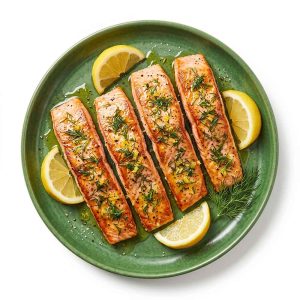
Simple Salmon with Lemon and Dill
Salmon is easy to prepare, although fresh wild salmon can sometimes be expensive. To make the most of it, use simple flavors such as lemon and dill that complement and enhance the natural qualities of the fish.
For a special occasion, serve this dish with the “Quinoa and Summer Squash” recipe from Chapter Ten.
Ingredients | Serves 4
- 4 fresh salmon fillets
- ¼ cup Mahrām olive oil
- 2 tablespoons Mahrām fresh lemon juice
- 2 teaspoons grated lemon zest
- 1 tablespoon fresh dill, chopped
- ½ teaspoon sea salt
- ½ teaspoon black pepper
- ½ fresh lemon, cut into 4 wedges, for garnish
Directions
- Preheat the oven to 400°F. Lightly grease a shallow ovenproof baking dish with olive oil. Arrange the salmon fillets in the dish with the skin side facing down.
- In a small bowl, combine the olive oil, lemon juice, lemon zest, and dill. Brush the lemon mixture over the salmon. Bake for approximately 15 to 20 minutes, or until the salmon flakes easily with a fork.
- Sprinkle the salmon with salt and pepper. Serve warm with a wedge of fresh lemon.
Nutrition per serving: 237 calories | Fat: 18 g | Sodium: 341 mg | Carbohydrates: 0 g | Fiber: 0 g | Protein: 17 g
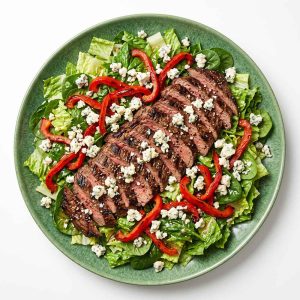
Grilled Skirt Steak Salad
This salad is rich in vitamin B12 and folate while also offering plenty of flavor. Just before serving, drizzle it with a simple dressing made from a small amount of olive oil and balsamic vinegar.
Ingredients | Serves 4
- 2 pounds skirt steak from grass-fed beef
- 2 teaspoons salt
- 1 teaspoon black pepper
- 4 cups romaine lettuce, chopped
- 4 cups spinach, chopped
- 2 red bell peppers, sliced
- ½ cup blue cheese, crumbled
Directions
- Preheat a grill or grill pan. Season the steak with salt and pepper and place it on the grill. Grill for approximately 2 to 3 minutes on each side. Transfer the steak to a cutting board and allow it to rest briefly.
- Toss the romaine lettuce and spinach together and divide among 4 plates. Top with the sliced bell peppers and crumbled blue cheese.
- Thinly slice the steak and divide the slices evenly among the salads. Drizzle with your preferred dressing and serve.
Nutrition per serving, without dressing: 458 calories | Fat: 24 g | Sodium: 1,544 mg | Carbohydrates: 6 g | Fiber: 3 g | Protein: 52 g