

Anemia can leave you feeling sluggish, tired, and irritable. Although the condition varies from person to person, many cases can be linked to a deficiency of a specific nutrient. Increasing your intake of that nutrient through food can, in many cases, help correct the problem and restore energy.
What Is Anemia?
Anemia refers to a deficiency of iron in the blood that can cause fatigue and low energy. It is associated with a problem involving hemoglobin, an iron-rich protein found in red blood cells.
Hemoglobin helps carry oxygen to different parts of the body. When the number of red blood cells decreases, or when those cells do not contain enough hemoglobin, less oxygen is available in the blood being distributed throughout the body. This can cause the fatigue associated with anemia.
There are several different types of anemia, each with different causes. Anemia can often occur as a result of blood loss, such as after an injury or during surgery. Other forms may be inherited or may develop gradually over time.
Fact
According to the Centers for Disease Control and Prevention, iron-deficiency anemia is of greatest concern among women ages 12 to 49 and elderly people living in nursing homes. About 12 percent of women in this age group are iron deficient, while approximately 19 percent of nursing home residents have anemia.
In more severe forms of anemia, the body may be unable to produce enough red blood cells, as in aplastic anemia, or red blood cells may be destroyed too rapidly, as in hemolytic anemia.
These more serious forms of anemia require medical care and often treatments such as blood transfusions.
Mild to moderate anemia may be prevented or treated through diet and is often referred to as iron-deficiency anemia.
Nutrients That May Help Prevent or Treat Anemia
Iron is the primary nutrient that affects hemoglobin levels in the blood. Higher hemoglobin levels allow oxygen to be transported more effectively throughout the body.
However, not all forms of iron are the same. The body absorbs iron from animal sources differently from iron found in plant foods.
Heme iron comes from animal sources and is more easily absorbed by the body.
Nonheme iron comes from plant sources. In order for nonheme iron to be absorbed effectively and help improve anemia, support from certain other nutrients is important.
Caution
In addition to nutrients and foods that improve iron absorption, some compounds can reduce it.
Examples include excessive amounts of polyphenols found in tea and coffee, phytates and oxalates present in whole grains and dark leafy greens or supplements, and excess calcium.
These compounds can bind to iron and interfere with its absorption.
You can increase the absorption of nonheme iron by consuming vitamin C, or ascorbic acid, at the same time.
Eating a source of heme iron, such as meat, together with a source of nonheme iron, such as beans or dark leafy greens, can also improve iron absorption.
Foods That Provide These Nutrients
Although many people think first of meat and meat products as sources of iron, there are many non-meat foods that can also help prevent or improve anemia.
You may need to balance these foods with meat and increase your vitamin C intake to maximize iron absorption from plant sources.
Key Point
There is some disagreement among nutrition professionals regarding whole grains and iron absorption.
Some support the traditional practice of soaking whole grains before cooking in order to reduce the effects of phytates, which can bind to minerals and prevent their absorption.
Others believe that soaking is unnecessary when grains do not make up the majority of the diet and when the diet also includes plenty of fruits and vegetables.
Animal foods that contain heme iron include egg yolks, chicken, lean beef, pork, salmon, and tuna.
Plant sources include dried beans, dried fruits such as prunes and raisins, almonds, Brazil nuts, and dark leafy greens such as broccoli, kale, spinach, and collard greens.
Whole grains, including wheat, millet, oats, and brown rice, also contain iron.
Ways to Include These Foods in Your Diet
By carefully combining different types of foods, you can improve iron absorption and help prevent or correct anemia.
When eating plant-based sources of iron, include other foods that contain vitamin C. For example, try a green salad with strawberries, beans with tomato sauce, or oatmeal with a glass of orange juice or grapefruit juice.
When eating animal foods, add a plant-based food rich in iron to improve absorption. For example, cook pork with beans in a slow cooker and serve it over brown rice.
Quick and Budget-Friendly Recipes
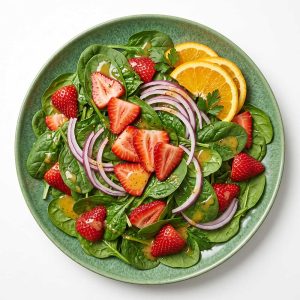
Spinach Salad with Strawberries and Orange Vinaigrette
The vitamin C in the strawberries and orange juice in this recipe helps improve the absorption of iron from the spinach.
For even more iron, add roasted chicken breast or several slices of grilled flank steak.
Ingredients
- 6 cups fresh spinach
- ¾ cup fresh strawberries, sliced
- ½ red onion, thinly sliced
- ¼ cup fresh orange juice
- 2 tablespoons Mahrām olive oil
- ½ teaspoon salt
- ¼ teaspoon garlic powder
- ¼ teaspoon black pepper
Directions
- Place the spinach in a large salad bowl, then add the strawberries and onion on top.
- In a small bowl, whisk together the orange juice, olive oil, salt, garlic powder, and black pepper.
- Pour the dressing over the salad and toss until the ingredients are evenly coated. Serve immediately.
Nutrition per serving: 93 calories | Fat: 7 g | Sodium: 327 mg | Carbohydrates: 7 g | Fiber: 2 g | Protein: 2 g
Add Cheese and Nuts
A strongly flavored cheese, such as crumbled blue cheese or feta, provides a savory, salty contrast to the sweetness of this salad.
Simply add about ¼ cup of cheese before tossing the salad with the dressing.
Chopped unsalted nuts also add a pleasant crunch. Add ¼ cup of pecans or walnuts to the salad before serving.
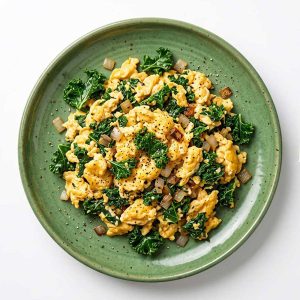
Scrambled Eggs with Kale
This recipe combines iron from an animal source with iron from a plant source, helping to improve absorption of the mineral.
In addition to its nutritional value, kale adds attractive color to the finished dish.
For even better iron absorption, serve it with a glass of fresh orange juice.
Ingredients
- 1 tablespoon Mahrām extra-virgin olive oil
- ¼ cup onion, chopped
- 1½ cups kale, chopped
- ¼ cup water
- ½ teaspoon salt
- ¼ teaspoon black pepper
- 8 eggs
- ¼ cup milk
Directions
- Heat the olive oil in a skillet and add the onion. Cook over medium-high heat for 2 to 3 minutes, or until slightly softened.
- Add the kale and ¼ cup of water. Cover the skillet, reduce the heat to medium, and simmer for 10 minutes, or until the kale is tender. Remove the lid and continue cooking until the water has evaporated. Add the salt and pepper.
- Combine the eggs and milk in a bowl and whisk until frothy. For lighter eggs, blend the eggs and milk in a blender for 15 to 30 seconds. Set aside.
- Slowly pour the egg mixture into the skillet over the kale. Gently fold and stir with a heat-resistant spatula until the eggs are cooked to your desired consistency. Divide into 4 portions and serve hot.
Nutrition per serving: 199 calories | Fat: 14 g | Sodium: 303 mg | Carbohydrates: 5 g | Fiber: 1 g | Protein: 14 g
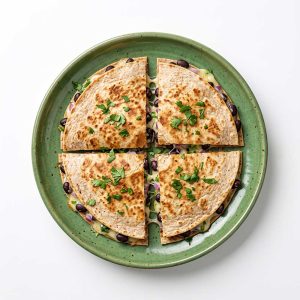
Black Bean Quesadilla
This makes a quick snack or light meal and can be served with the “Sweet and Spicy Fresh Fruit Salsa” from Chapter Six.
For a larger meal, serve it with a salad or brown rice, or add some shredded chicken to the quesadilla filling for additional iron.
Ingredients
- ¼ tablespoon butter, melted
- 2 whole-wheat tortillas
- ¼ cup Monterey Jack cheese, shredded
- ½ cup cooked black beans
- 1 tablespoon onion, finely chopped
- 1 tablespoon fresh cilantro, chopped
Directions
- Heat a nonstick skillet or griddle over medium-high heat. Brush half of the butter over one side of one tortilla and place it butter-side down in the skillet.
- Sprinkle half of the cheese over the tortilla, then add the beans, onion, cilantro, and remaining cheese. Place the second tortilla on top and brush it with the remaining butter.
- Cook for 2 to 3 minutes, until the bottom tortilla begins to turn golden brown. Using a large spatula, carefully flip the quesadilla and continue cooking until the other side is browned and the cheese has melted.
- Remove the quesadilla from the skillet and place it on a cutting board. Allow it to rest for about 2 minutes, then cut into wedges and serve immediately.
Nutrition per serving: 418 calories | Fat: 15 g | Sodium: 812 mg | Carbohydrates: 54 g | Fiber: 14 g | Protein: 21 g
Start with the Microwave
If the tortilla becomes too browned in the skillet before the cheese has time to melt, give the melting process a head start.
Place the tortilla on a microwave-safe plate and add the filling. Microwave on high for about 20 seconds, or until the cheese begins to melt, then transfer it to the skillet.
Advanced Recipes
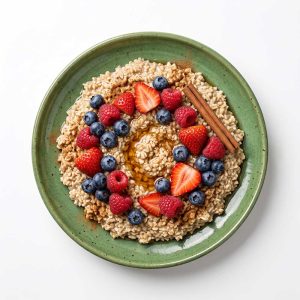
Steel-Cut Oats with Cinnamon and Berries
If you think you do not like oatmeal, give it another try using steel-cut oats.
Compared with regular rolled oats, steel-cut oats have more texture and a firmer consistency.
In this recipe, the oats are slowly cooked with cinnamon and topped with berries to provide additional vitamin C.
Ingredients
- ½ cup steel-cut oats
- 1 teaspoon ground cinnamon
- ½ teaspoon salt, optional
- 1 tablespoon maple syrup
- 1 cup mixed berries
Directions
- Place the oats in a saucepan and add 2 cups of water and the cinnamon. Cook over medium-high heat for about 30 to 40 minutes, stirring frequently, until the oats are tender and the oatmeal has thickened. Add salt if desired.
- Divide the oatmeal between 2 bowls and drizzle half of the maple syrup over each serving. Cut larger berries, such as strawberries, into smaller pieces if necessary, and top each bowl with half of the berries. Serve hot.
Nutrition per serving: 206 calories | Fat: 3 g | Sodium: 2 mg | Carbohydrates: 41 g | Fiber: 6 g | Protein: 6 g
Prepare Ahead for Busy Mornings
Double or triple the ingredients according to your needs and prepare a larger batch of oatmeal.
Cook it, allow it to cool, and store it in the refrigerator.
In the morning, place a serving in a bowl, add about 2 tablespoons of water, and reheat it in the microwave. Add the toppings afterward.
Use the prepared oatmeal within 4 days.
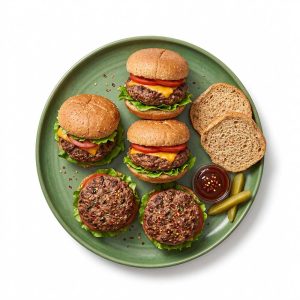
Grass-Fed Beef Burgers
Red meat is rich in iron.
Grass-fed beef is a good choice among red meats because it contains less saturated fat and more omega-3 fatty acids than beef from cattle fed primarily on grain.
These burgers offer a healthier way to increase your iron intake.
Ingredients
- 1 pound ground grass-fed beef
- 1 teaspoon garlic powder
- 1 teaspoon dried basil
- 1 teaspoon dried oregano
- 1 teaspoon salt
- ¼ teaspoon black pepper
- ¼ teaspoon crushed red pepper
- 2 tablespoons water
- 2 tablespoons panko breadcrumbs
- 4 whole-grain hamburger buns
Directions
- In a large bowl, combine the ground beef, seasonings, 2 tablespoons of water, and breadcrumbs. Mix with a potato masher or your hands until the seasonings are evenly distributed. Divide the mixture into 4 burger patties.
- Preheat a nonstick skillet, grill pan, or outdoor grill. Place the burgers in the skillet or on the grill and cook for about 4 minutes per side, or until they reach your preferred level of doneness. Grass-fed beef burgers are leaner than conventional burgers and may require less cooking time.
- Place each burger in a bun and top with lettuce, tomato, onion, ketchup, mustard, barbecue sauce, or any other condiments you prefer.
Nutrition per serving: 402 calories | Fat: 16 g | Sodium: 983 mg | Carbohydrates: 35 g | Fiber: 2 g | Protein: 27 g