


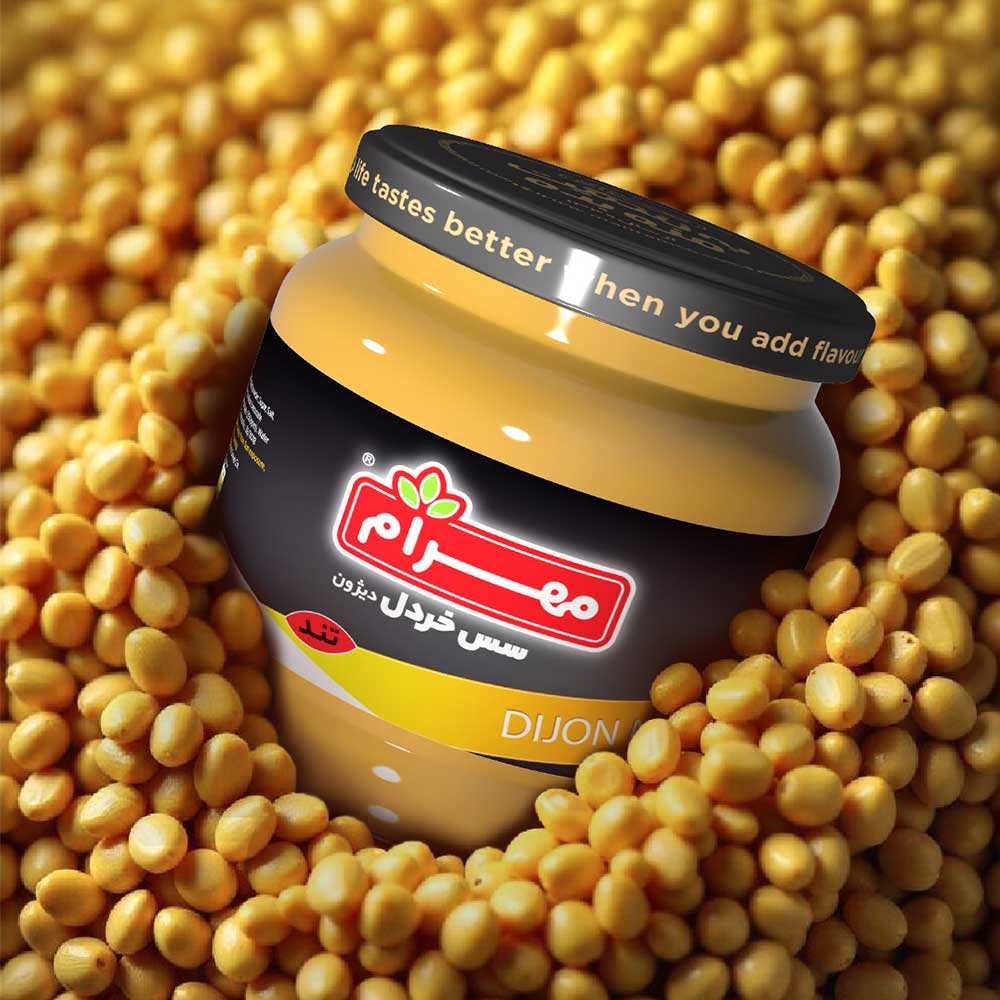
A Kroger Brand spokesperson I spoke to says, “Yellow and Dijon mustards are made very similarly, with shared ingredients like mustard seed, water, vinegar, and salt.” The milling process for both is also much the same and “is one of the main components in creating great flavor, constancy, and texture.”
There are three distinguishing features between yellow mustard and Dijon mustard: texture, flavor, and color.
When it comes to texture, the Kroger Brand spokesperson says, “Yellow mustard has a thinner consistency compared to Dijon,” which is creamier and thicker.
“While yellow mustard is a mild mustard with only a slight bite to it,” says the expert, “Dijon mustard is known for its sharper flavor.” That’s because yellow mustard uses yellow mustard seeds, which are mild, compared to black or brown mustard seeds used to make Dijon mustard, which is spicy and bold.
Dijon mustard is darker in color because of the mustard seeds’ color. Yellow mustard often has turmeric added to increase its bright yellow hue.
Can You Use Yellow and Dijon Mustard Interchangeably?
“Both yellow and Dijon mustard can be used on a variety of classic dishes,” explains the expert. “From marinating meat to mixing salad dressings, both mustards add great flavor and texture to any meal.”
Dijon mustard may be better suited as an addition to sauces and dressings like aiolis or honey mustard sauce or when topping sandwiches, fish, or veggies.
Conversely, yellow mustard is most often utilized as a topping on classic American dishes like hamburgers or hotdogs. It “can be used as a base coat for smoking meat,” explains the expert, “as it adds flavor and moisture while holding the base of the rub onto the meat.”